Search This Blog

Friday, March 21, 2014

Sexiest Art Poll

The Guardian has their own list of sexiest works of art ever.

I can agree with, say, The Fisherman's Wife:
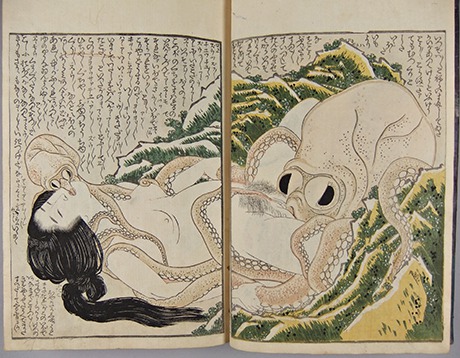
But then what about Leda and her Swan?:

Totally agree with Corregio's Jupiter and Io:
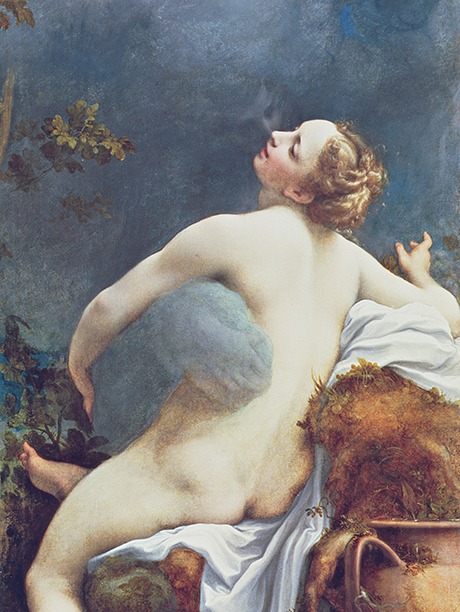

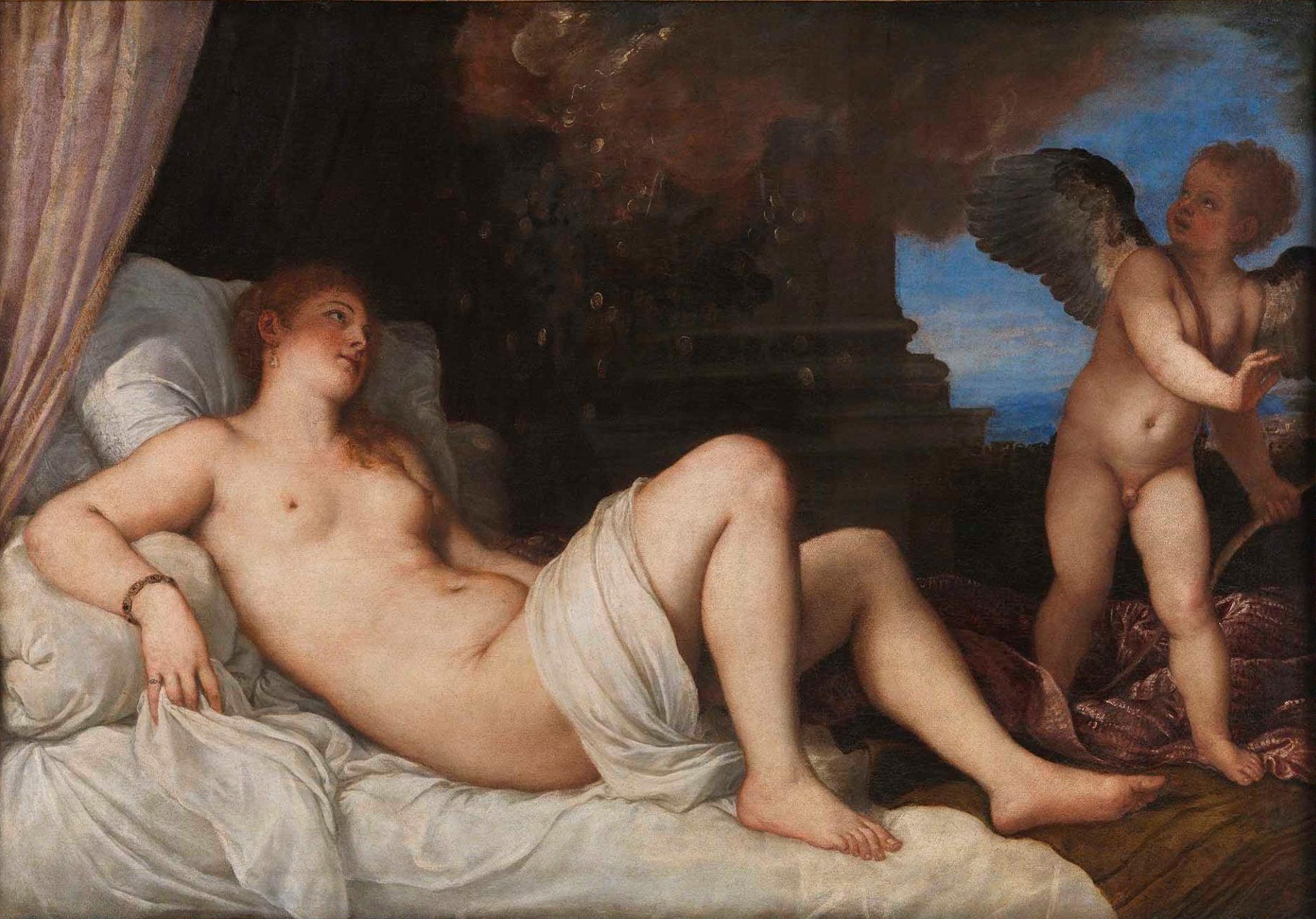
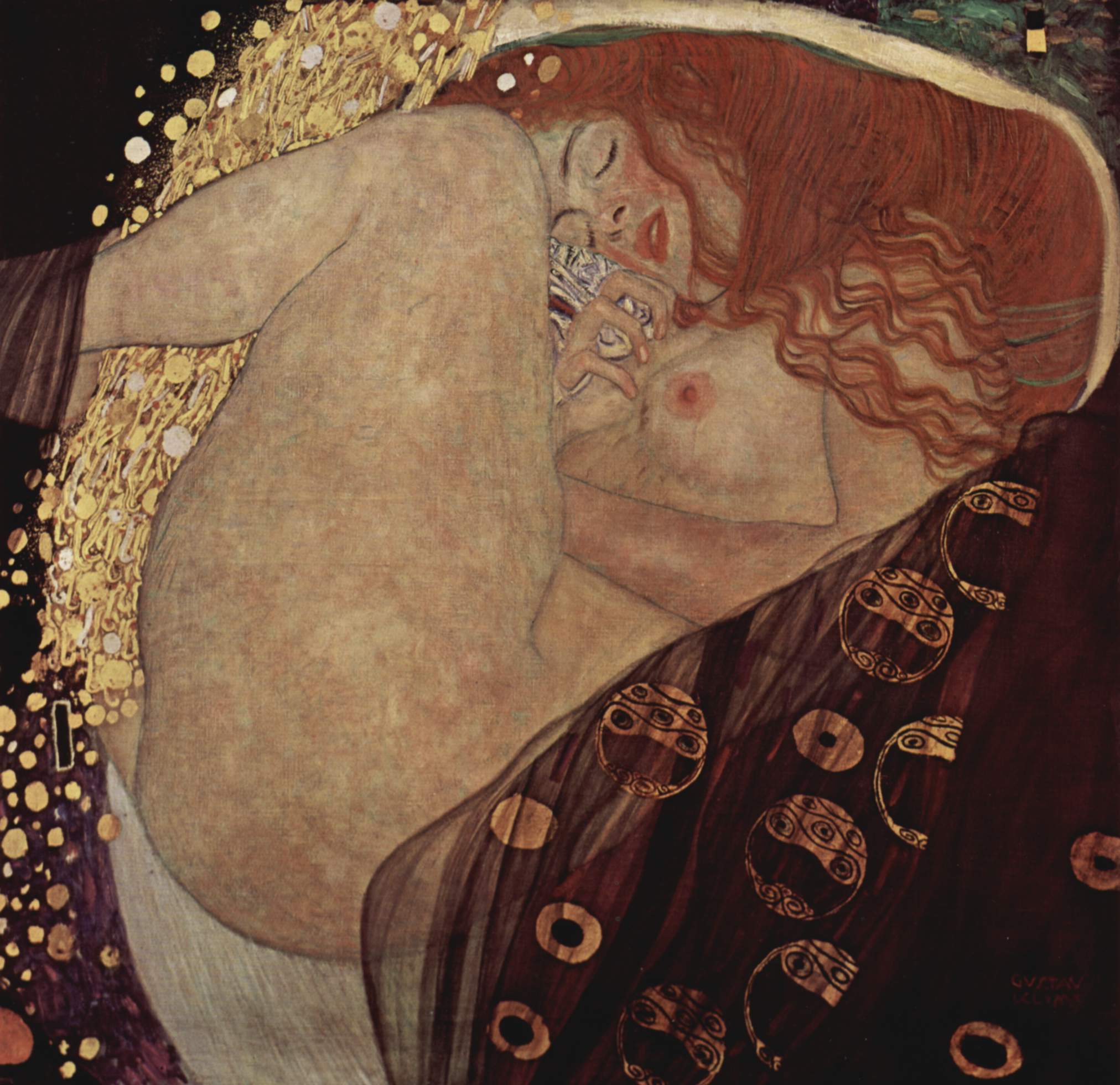
But I feel like they picked the wrong Danae image. 
They went with Titian:
I would personally go with Klimt:

What else?

Ah, so JS, RS, and Jeff bring up the ever sexy St. Theresa by Bernini:

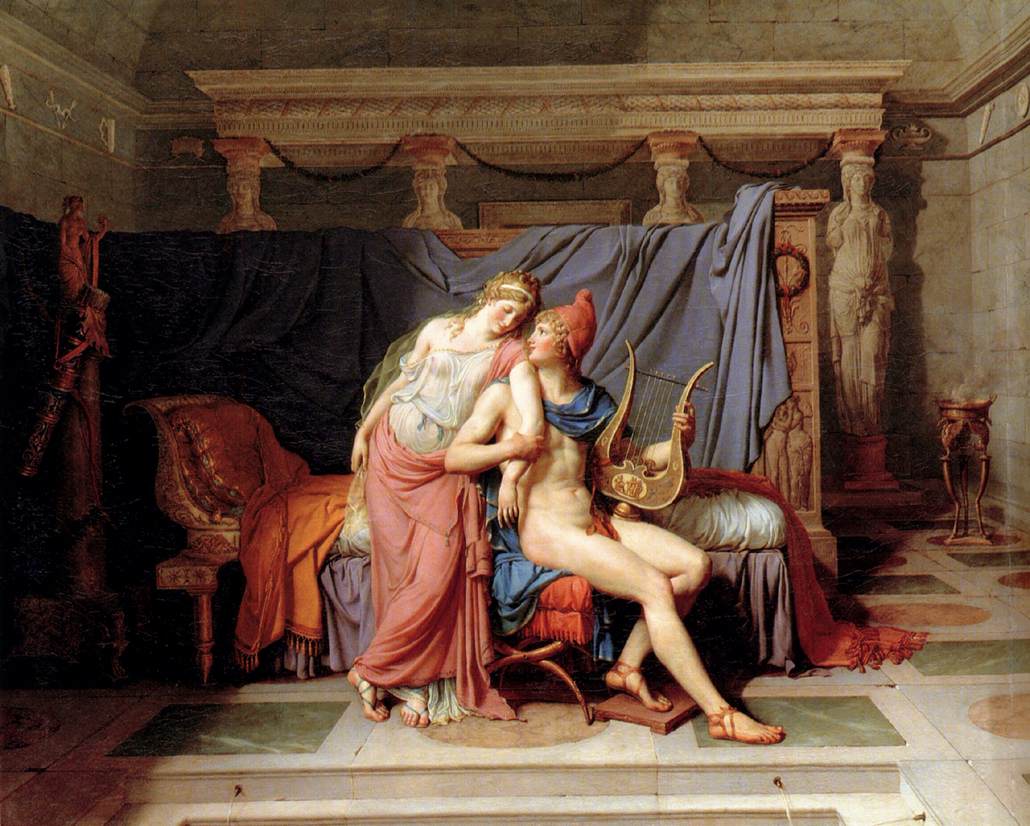
And a recommendation from AK:
And who could forget Caravaggio's Amor:

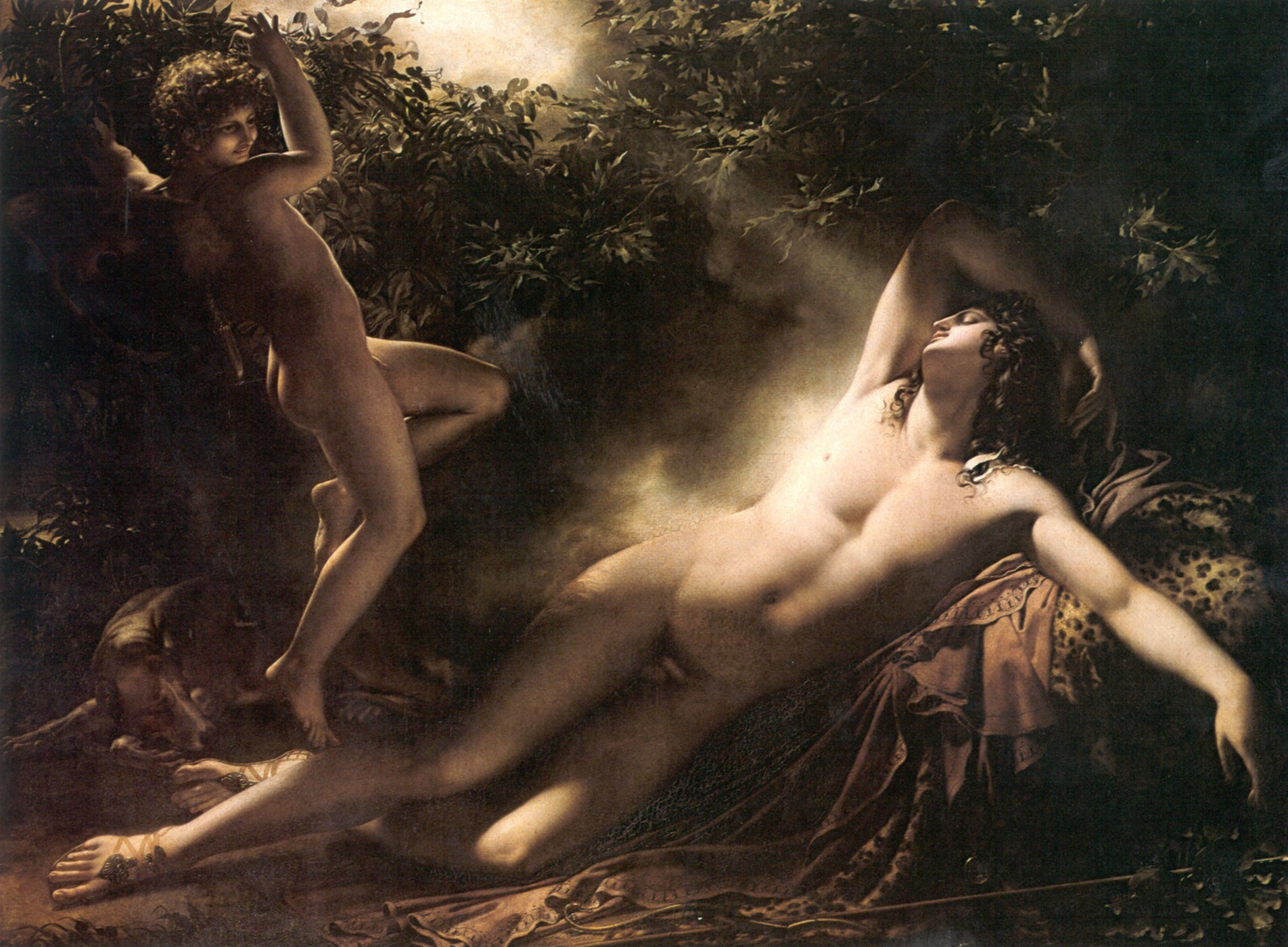
BDM adds Girodet's Sleep of Endymion (um, YES):

SLSH brings up the Louvre's Sleeping Hermaphrodite:
Back: 
Front: 

Jennifer says David's Cupid and Psyche (so mischievous):


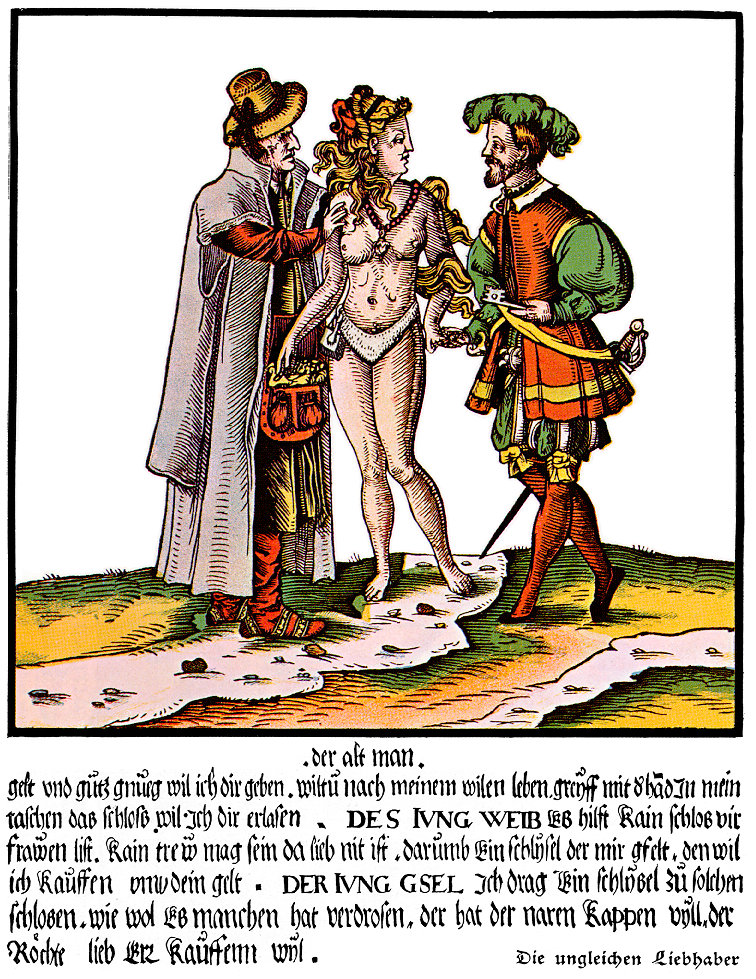
Chastity belts and exchange

For Felicitas:


See HERE for the German text


Thursday, March 20, 2014

Triumphal Entries and Nudity

Because I wanted to know more about this picture:


Thursday, March 6, 2014

Death in Pictures and Problems

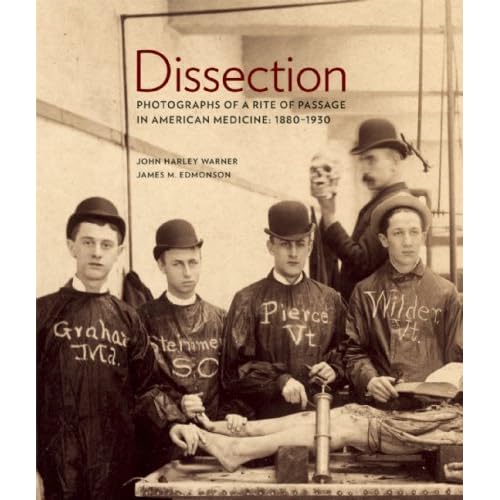
In Alabama, there is a high school student facing suspension for taking a selfie with a cadaver.

But this is not so unusual for anyone who has looked through James Edmonson's book Dissection: Photographs as a Rite of Passage in American Medicine, 1880-1930.


The book itself has many more intriguing and really quite humorous images that cross the boundaries of decorum expected by the university spokesperson. 


I was recently surprised by this notion of "respect" and "dignity" being used as a reason for a highly trained forensic anthropologist and her group (featured on BBC's History Cold Case) to bury a rare and wonderfully preserved anatomical specimen of a young child rather than keep it in a museum setting:


Saturday, March 1, 2014

Jeremy Bentham's "Auto-Icon"


Wikipedia does a pretty good job of explaining it:

"Bentham died on 6 June 1832 the age of 84 at his residence in Queen Square Place in Westminster, London. He had continued to write up to a month before his death, and had made careful preparations for the dissection of his body after death and its preservation as an auto-icon. As early as 1769, when Bentham was just twenty-one years old, he made a will leaving his body for dissection to a family friend, the physician and chemist George Fordyce, whose daughter, Maria Sophia (1765–1858), married Jeremy's brother Samuel Bentham.[18] A paper written in 1830, instructing Thomas Southwood Smith to create the auto-icon, was attached to his last will, dated 30 May 1832.[18]
On 8 June 1832, two days after his death, invitations were distributed to a select group of friends, and on the following day at 3 p.m., Southwood Smith delivered a lengthy oration over Bentham's remains in the Webb Street School of Anatomy & Medicine in Southwark, London. The printed oration contains a frontispiece with an engraving of Bentham's body partly covered by a sheet.[18]
Afterward, the skeleton and head were preserved and stored in a wooden cabinet called the "Auto-icon", with the skeleton padded out with hay and dressed in Bentham's clothes. Originally kept by his disciple Thomas Southwood Smith,[19] it was acquired by University College London in 1850. It is normally kept on public display at the end of the South Cloisters in the main building of the college; however, for the 100th and 150th anniversaries of the college, and in 2013,[20] it was brought to the meeting of the College Council, where it was listed as "present but not voting".[21]
Bentham had intended the Auto-icon to incorporate his actual head, mummified to resemble its appearance in life. However, Southwood Smith's experimental efforts at mummification, based on practices of the indigenous people of New Zealand and involving placing the head under an air pump over sulphuric acid and simply drawing off the fluids, although technically successful, left the head looking distastefully macabre, with dried and darkened skin stretched tautly over the skull.[18] The Auto-icon was therefore given a wax head, fitted with some of Bentham's own hair. The real head was displayed in the same case as the Auto-icon for many years, but became the target of repeated student pranks. It is now locked away securely.[22]
A 360-degree rotatable, high-resolution 'Virtual Auto-Icon' is available at the UCL Bentham Project's website."

Thanks for the heads-up, PR!

Friday, February 21, 2014

Deathly Art in Chicago

All images from the Art Institute of Chicago:


Rock out with your cock out (on display, in a jar)

Here's an article on how one (the only?) penis museum is looking for that one member to fill out its collection.


And thanks to AZ for letting me share so many of his posts in the last few entries!

Wednesday, February 19, 2014

The Quotable Elias

For those who have never read Norbert Elias's The Civilizing Process, it recounts a number of rules for proper behavior in society over time.

Here are a few examples:


Donated Bodies

Check out this article on what happens to your body when you donate it to science.

And a creepy enough video introduction to dissecting cadavers:


Monday, February 17, 2014

Crystal Skull Face

Click below to see how forensic anthropologists create the terrifying face of the crystal skull vodka bottle:


Pucker up and think


Sunday, February 16, 2014

Henry VIII--just a bad sperm donor?

Click the image to get the story:


Wednesday, February 5, 2014

Vesalius: Oops, I vivisected someone


From Katharine Park, "The Criminal and the Saintly Body: Autopsy and Dissection in Renaissance Italy," Renaissance Quarterly, Vol. 47, No. 1 (Spring, 1994), p. 19.

Tuesday, February 4, 2014

Wednesday, January 29, 2014

A Nowadays Passion Play

For those of you who are not aware, the city of Manchester, England decided to take a page from the playbook of tradition by staging a passion play--a theatrical performance of the last days of the life of Jesus. But this one was decidedly site- and sound-specific, featuring Mancunians covering well-known British bands.


Music and Brains

Fiona Apple - Every Single Night

Chance the Rapper - Brain Cells

Let's talk about sex


From Montaigne, Essays, III, ch. 5 (trans. George B. Ivez, Harvard University Press, 1925)
Cited in Mikhail Bakhtin, Rabelais and His World, ch. 5

The same chapter in Bakhtin mentions phallic bell towers and redesigning Paris with pudenda.

Sunday, January 26, 2014

Wednesday, January 22, 2014

Mappy Things

New Yorker article on The Allure of the Map, in literature and as a concept.

A blog appropriately called Strange Maps (like NY Times infographics, but, you know, maps, and some historical and fictional ones as well)

A map of England sharting on France:


More to come...


Who's on First? I mean Top?


from Carolyn Walker Bynum, "The Female Body and Religious Practice in the Later Middle Ages," Fragments of a HIstory of the Human Body, vol. 1.

Show Me Your Liver


Bronze sheep's liver with writing, known as the Liver of Piacenza. It was likely used by haruspex to read omens.

Take Another Little Piece


And if you are interested in the crazy adventures of Descartes' mortal vessel (and don't mind some major back history of Enlightenment philosophy) I recommend reading Descartes' Bones by Russell Shorto.

Thanks for the link, NS!

Deader than Dead

A Short Article on Holbein's Dead Christ in the Guardian is really simple, but if you want a more nuanced yet exciting and beautifully written article on the subject, look no further than Julia Kristeva's "Holbein's Dead Christ" in Fragments for a History of the Human Body vol. 1.


This blogger at Left Traces gives a little summary of her article and also connects it to a contemporary work of art playing on Dead Christ:


Friday, November 22, 2013

Tuesday, October 22, 2013

Monday, October 21, 2013