


Draw & Animate the Body with I Heart Guts
-
This Saturday, August 1, bring the family for the program "Draw & Animate
the Body with I Heart Guts."
Join Wendy Lazar, founder of I Heart Guts, the orig...
Showing posts with label pop culture. Show all posts
Showing posts with label pop culture. Show all posts
Friday, October 3, 2014
Monday, September 15, 2014
Saturday, August 9, 2014
New Entertainments
In addition to the blogs below that I follow frequently as well as NPR's Science Friday and Radiolab, here are a few new places I've been finding entertainment:
The History Blog--concentrates on objects in history:
http://www.thehistoryblog.com/
The BBC show In Our Time
http://www.bbc.co.uk/programmes/b006qykl
And to delve into historical fiction:
The History Blog--concentrates on objects in history:
http://www.thehistoryblog.com/
The BBC show In Our Time
http://www.bbc.co.uk/programmes/b006qykl
And to delve into historical fiction:
Penny Dreadful, a magical victorian universe of anatomy, urbanism, vampires, ancient languages, etc. etc.:
And The Knick, a much more realistic medical drama set in early 20th century New York:
Saturday, July 19, 2014
Fantastical Giant Worms

We are all familiar with some giant worm or another--particularly the ones from pop culture. But these aren't new imaginations. Some of them are based on much earlier legendary stories of giant worms such as the minhocão.
And there is new evidence that paleozoic sand worms existed in the soils of England.
Saturday, July 12, 2014
The Architecture of Game of Thrones
Architizer looks at the basic places where Game of Thrones filmed in order to figure out what places were inspirations for King's Landing, Astapor, "The North", etc.
Le Mag thinks various cities or courts stand for specific places in Europe.
If you can't remember what the places look like, see the various title sequence videos where the cities emerge like automated toys.

The armillary sphere that acts as the sun over this sequence is itself taken from Renaissance designs, such as the amazing one in the Museo Galileo.


Le Mag thinks various cities or courts stand for specific places in Europe.
If you can't remember what the places look like, see the various title sequence videos where the cities emerge like automated toys.
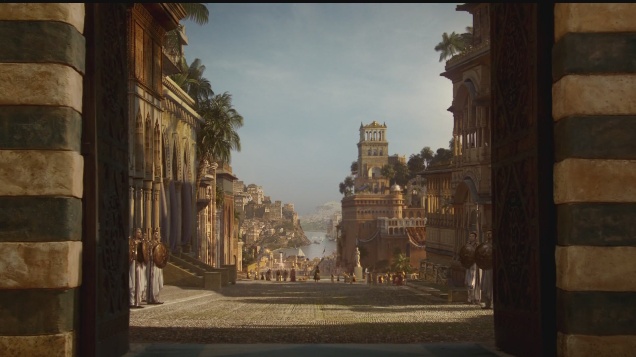
Qarth
The armillary sphere that acts as the sun over this sequence is itself taken from Renaissance designs, such as the amazing one in the Museo Galileo.
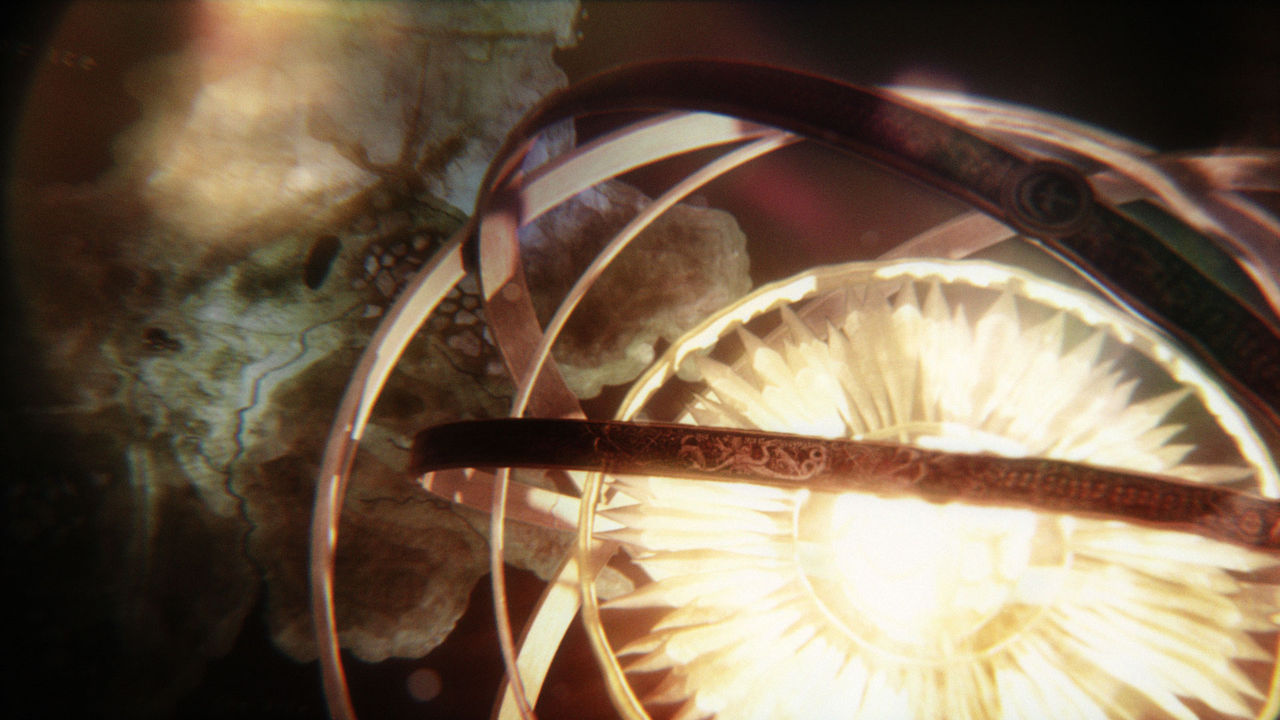
Intro scene armillary sphere

Museo Galileo armillary sphere
Sunday, May 18, 2014
Brief Statement Regarding Penny Dreadful
There is a new show by Showtime called Penny Dreadful. The name comes from cheap, sensational novels. The show is dramatic enough to earn the name, but has a great deal of historical and literary references to pique the interest of historians of science and medicine.
Within the first episode, resurrection men, vampires, egyptologists, tarot readers, and Victor Frankenstein and his empathy-worthy recreation appear. Justice is done to all in some sense: The resurrection men are working in squalid and secretive conditions, the major vampires are very much like their early literary counterparts, the Egyptian scholar is set at the British Museum (fairly enough), and Mr. Frankenstein names his lovely little project "Adam" as a sort of nod to Mary Shelley's so-called monster who was obliquely, and of his own accord, given that title.
Viewers will also get to see characters from The Picture of Dorian Gray and Dracula imbedded into the plot. I only wonder how many historians were on the budget...

Within the first episode, resurrection men, vampires, egyptologists, tarot readers, and Victor Frankenstein and his empathy-worthy recreation appear. Justice is done to all in some sense: The resurrection men are working in squalid and secretive conditions, the major vampires are very much like their early literary counterparts, the Egyptian scholar is set at the British Museum (fairly enough), and Mr. Frankenstein names his lovely little project "Adam" as a sort of nod to Mary Shelley's so-called monster who was obliquely, and of his own accord, given that title.
Viewers will also get to see characters from The Picture of Dorian Gray and Dracula imbedded into the plot. I only wonder how many historians were on the budget...

Saturday, May 17, 2014
The Man Who Read Stories From Bones
From the New York Times:
With ghoulish geniality, Clyde Snow liked to say that bones made good witnesses, never lying, never forgetting, and that a skeleton, no matter how old, could sketch the tale of a human life, revealing how it had been lived, how long it had lasted, what traumas it had endured and especially how it had ended.
...
“Bones can be puzzles,” he told The New York Times in 1991, “but they never lie, and they don’t smell bad.”
...
“Witnesses may forget throughout the years, but the dead, those skeletons, they don’t forget,” he told The Times in 2002. “Their testimony is silent, but it is also very eloquent.”
No doubt he was an inspiration to Kathy Reichs, who is a forensic anthropologist and the novelist who wrote the books on which the TV show Bones is based on.
And for a Dolly Parton song to go with it:
With ghoulish geniality, Clyde Snow liked to say that bones made good witnesses, never lying, never forgetting, and that a skeleton, no matter how old, could sketch the tale of a human life, revealing how it had been lived, how long it had lasted, what traumas it had endured and especially how it had ended.
...
“Bones can be puzzles,” he told The New York Times in 1991, “but they never lie, and they don’t smell bad.”
...
“Witnesses may forget throughout the years, but the dead, those skeletons, they don’t forget,” he told The Times in 2002. “Their testimony is silent, but it is also very eloquent.”
No doubt he was an inspiration to Kathy Reichs, who is a forensic anthropologist and the novelist who wrote the books on which the TV show Bones is based on.
And for a Dolly Parton song to go with it:
Monday, May 5, 2014
Medieval Medicine and Popular Culture
First of all, THIS VIDEO starring Steve Martin as Theodoric of York. And we all know the Bring Out Your Dead scene in Monty Python and the Holy Grail.
But then there's Phone Call to the Fourteenth Century.
And this Leech Collector.
And then, for a lack of knowledge regarding popular culture, here's some medieval torture.
But then there's Phone Call to the Fourteenth Century.
And this Leech Collector.
And then, for a lack of knowledge regarding popular culture, here's some medieval torture.
Thursday, April 24, 2014
The Academic Obsession with Mad Men
First, I would like to point out that Mad Men has some amazing art historical conversations and images throughout. It's hard for an art historian to forget the scene when the underlings sneak in to Cooper's office to see the Rothko, when visitors catch sight of The Fisherman's Wife, etc. And the artworks themselves have spawned a blog just to keep track of them: http://artofmadmen.wordpress.com/

But both academics and libraries have combined a love of mad men with scholarly inquiry. Duke University Library's Rubenstein Rare Book Library has created Mad Men Mondays to use the show as a jumping off point for investigations into parts of collection that corroborate the ideas floating around in the 60s: http://blogs.library.duke.edu/rubenstein/tag/mad-men/
And Duke University Press came out recently with a volume called Mad Men, Mad World: Sex, Politics, Style and the 1960s, edited by Lauren M. E. Goodlad, Lilya Kaganovsky, and Robert A. Rushing
But both academics and libraries have combined a love of mad men with scholarly inquiry. Duke University Library's Rubenstein Rare Book Library has created Mad Men Mondays to use the show as a jumping off point for investigations into parts of collection that corroborate the ideas floating around in the 60s: http://blogs.library.duke.edu/rubenstein/tag/mad-men/
And Duke University Press came out recently with a volume called Mad Men, Mad World: Sex, Politics, Style and the 1960s, edited by Lauren M. E. Goodlad, Lilya Kaganovsky, and Robert A. Rushing
Saturday, April 12, 2014
The Art Historical Fantasy of Grand Budapest Hotel
Firstly, Boy with Apple may now be my favorite forgery of all time (with the forgery of the Northern Renaissance style triptych at the Palmer Museum of Art). This is partially everyone was meant to know it was fake--it was made for a movie--but also because it is convincing in its details. The Guardian delicately threw a few examples out there in their article Is The Grand Budapest Hotel's 'Boy with Apple' artwork plausible? See The Gallerist on this as well.

And this was one among many forgeries, others giving a nod to Gustav Klimt and Caspar David Friedrich as noted by the folks blogging for Sotheby's.
The most notable was Two Lesbians Masturbating, a nod by Rich Pellegrino to Egon Schiele.


But the movie was a graphic design whirlpool of Eastern European pre-war imagery. The Creative Review looks at many of the painstakingly rendered props in Designing for The Grand Budapest Hotel. And they look at more images of little details like keychains, perfume, etc. at The Warholian.
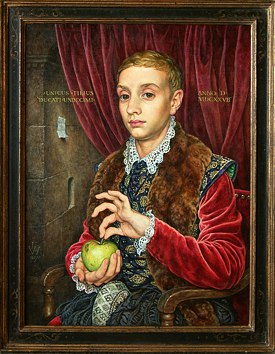
Boy with Apple, Michael Taylor
And this was one among many forgeries, others giving a nod to Gustav Klimt and Caspar David Friedrich as noted by the folks blogging for Sotheby's.
The most notable was Two Lesbians Masturbating, a nod by Rich Pellegrino to Egon Schiele.

Two Lesbians Masturbating, Rich Pellegrino

Portrait of Wally, Egon Schiele
But the movie was a graphic design whirlpool of Eastern European pre-war imagery. The Creative Review looks at many of the painstakingly rendered props in Designing for The Grand Budapest Hotel. And they look at more images of little details like keychains, perfume, etc. at The Warholian.
Subscribe to:
Posts (Atom)


