Gift Bag Ideas For Post Surgery Recovery
-
Who doesn’t love gifts?! Plus gifts that will help you while you’re in pain
what a steal.
Hysterectomy Recovery Gift Bag
Getting your uterus removed is...
Thursday, August 2, 2012
Sunday, July 22, 2012
Saturday, July 21, 2012
Wednesday, July 18, 2012
Tuesday, July 17, 2012
Monday, July 9, 2012
Lady Macbeth's Period
In her article, "A Strange Infirmity," Jenijoy La Belle points out that Lady Macbeth, in preparing to murder Duncan in order to assure a certain line of kingship, asks a preternatural being to allow her menstruation to stop, assuming, psychologically, that it will make her less "feminine" and able to do the deed. Very interesting read indeed.
Note that the dress in this picture, as it exists today with the beetle wings all over being refurbished, is included in an earlier post from last spring.
John Singer Sargent, Ellen Terry as Lady Macbeth, 1889, Tate Gallery, London
Note that the dress in this picture, as it exists today with the beetle wings all over being refurbished, is included in an earlier post from last spring.
Saturday, July 7, 2012
Cellini's Blood
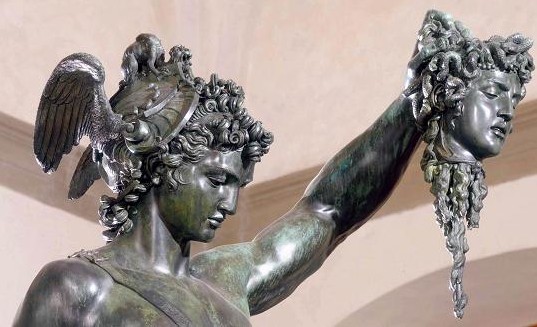
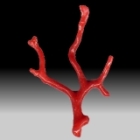
Michael Cole's essay Cellini's Blood posits that the blood spewing from Medusa's neck in Benvenuto Cellini's mid-16th-century bronze at the Piazza della Signoria in Florence--and that dripping and coagulating from her neck--evokes coral. Coral was thought to have come either from Medusa's ichor itself or from seaweed that was petrified by her gaze and turned red from her blood. The significance is how it relates to bronze and the art of casting, looking especially at Cellini's dramatic autobiography and also enhances the value of the gift--coral being precious and acting as a periapt--being presented by Perseus to the citizens of Florence.
Friday, July 6, 2012
Science Florentine
One room of Susini's wax anatomical models at La Specola.
A model of the bicep at the Museo Galileo in Florence
One of Susini's famed Venuses
An armillary sphere by Antonio Santucci at the Museo Galileo
Early thermometers at the Museo Galileo
"Wine for Women"

The "baby hatch" at the Ospidale degli Innocente. The grate was made just this size so that only newborns could pass through.
A wax depicting the plague at La Specola
A larger view of the "baby hatch" at the Ospidale. The building itself was designed by Brunelleschi, the architect of the famed Duomo in the heart of Florence
A wooden model of a fetus in utero at La Specola
A relic at San Lorenzo in Florence
Saturday, June 9, 2012
Tuesday, June 5, 2012
Thursday, May 31, 2012
Tuesday, May 29, 2012
Evolution before Darwin
Most people today are taught only the basics about the history of evolution, which ends up with us all thinking evolution=Darwin. But these ideas were floating around long before Darwin. I will give just a few examples.
In terms of how the design of living things are due to their function, look no further than Luther--not saying he's correct in his statement, but the idea is there:
“Men have broad shoulders and narrow hips, and accordingly they possess intelligence. Women have narrow shoulders and broad hips. Women ought to stay at home; the way they were created indicates this, for they have broad hips and a wide fundament to sit upon.” [No. 54]"
But also when it comes to climate, it was known in ancient times that environment could affect general physiological or anatomical differences, an explanation for the Eastern folks with deformed heads or the bandy-legged Ethiopians described by Hippocrates.
In terms of how the design of living things are due to their function, look no further than Luther--not saying he's correct in his statement, but the idea is there:
“Men have broad shoulders and narrow hips, and accordingly they possess intelligence. Women have narrow shoulders and broad hips. Women ought to stay at home; the way they were created indicates this, for they have broad hips and a wide fundament to sit upon.” [No. 54]"
Lucas Cranach, Martin Luther and Katarina von Bora
(note her tiny waist--a visual trope throughout Cranach's portraits of women that seems to echo Luther's statement)
Closer to his own time, folks like Lamarck were putting forth evolutionary theories. And his most closely resemble what we know think of as "social Darwinism"--a phenomenon that is an extrapolation from Darwinism used to justify social inequality by creating arguments that it is part of a natural hierarchy.
Wednesday, May 16, 2012
Bellmeriana
Hans Bellmer. La Poupée (The Doll), detail. Paris, Editions GLM, 1936. Linocut on pink paper; 16.7 x 12.8 cm.
Monday, May 14, 2012
The Many Uses of Feminine Products
1. Douse tampons with hydrogen peroxide or bleach to spot-clean clothing stains
2. Use maxi pads to absorb spills on the carpet
3. Allow children to use maxis as stickers--they will stick on anything and come off clean!
4. Collages
5. Use tampons as makeshift "growing sponge" toys by using rubber bands to form shapes and figures
6. Soak in ketchup and put on misogynist's car antenna
7. Use in science experiments!
8. Trickery:
http://25.media.tumblr.com/tumblr_ly2nzzMRrM1r3zbhjo1_500.jpg http://24.media.tumblr.com/tumblr_ly2n0tuwsc1qcgly2o1_500.jpg
9. Nosebleeds
Saturday, April 28, 2012
Tuesday, April 24, 2012
Wednesday, April 18, 2012
Tuesday, April 17, 2012
WCW on whales
An excerpt from Some Simple Measures in the American Idiom and the Variable Foot:
II: HISTOLOGY
There is
the
microscopic
anatomy
of
the whale
this is
reassuring

Whale, American Museum of Natural History, New York
Brueghel, Bowie, and William Carlos Williams

www.youtube.com

See the poem here:
The clips are from the film The man who fell to Earth. The song is from The man who fell to Earth musical

David Bowie wrote this for the movie The Man Who Fell to Earth. In it, he opens a book of poetry with Brueghel's Fall of Icarus illustrated. I would like to think it's a version of WCW's poems:
See the poem here:
http://wcwbrueghelpoetry.blogspot.com/2007/05/landscape-with-fall-of-icarus.html
Sunday, April 15, 2012
Family Treasures
Saturday, April 14, 2012
Real Live Academic Quote of the Day 4/15/12
"The two great ages of geographical discovery through the voyages of the early 1500s and through Alexander's conquests correspond to two great ages of anatomical discovery. These are also the two most inventive ages of erotic art in the West, for happy discoveries inspire a hopeful curiosity about everything."
Mayor, Artists and Anatomists, 1984
Wednesday, April 11, 2012
Bodies in the Blogosphere
I've seen most of this stuff before, but nice to have it in one place (even if not attributed):
http://marinni.livejournal.com/258692.html?thread=1060740
Tuesday, April 10, 2012
Witches Embraced in Art History

Hans Baldung Grien, New Year’s Wish with Three Witches, 1514
I first saw this image [in print] in Koerner's The Moment of Self-Portraiture of German Renaissance Art (1993). There, he used it as part of a larger argument that the self was ingrained in art, and that the viewer became the subject in that he/she had to contend with their own thoughts on the artwork at hand.
Claudia Swan used witchcraft as a way to show the imagination of, mostly, Jacques de Gheyn II in Art, Science, and Witchcraft in Early Modern Holland: Jacques de Gheyn II (1565-1629). (She also has a wonderful academic fascination with both blowfish and scientific representation).
And this filters (anachronistically) into Lyndal Roper's Oedipus and the Devil, which uses testimony of women accused of witchcraft to show, through their imaginative stories, how gender is constructed and reconstructed in a social context.
Monday, April 9, 2012
The Photographer

Edweard Muybridge is quite the character. In honor of the 182nd anniversary of his birth, Google put up a Doodle that animates his famous series of pictures proving that racing horses do, in fact, lift all their legs up at once.
This is what he's best known for -- serial photography that is now thought of as essentially the predecessor to film. But it's weird that he's still famous for his photography even though he killed another man in cold blood.
Such a story inspired Philip Glass to produce an opera called The Photographer (1982).
But what always interested me (obviously) are his body studies. He made people strip nude and move in certain ways so that he could record how the body looked in motion.

Muybridge, Woman Walking Down Stairs, 1887.
And Muybridge was also [according to some] the inspiration for one of the coolest paintings ever, Marcel Duchamp's Nude Descending Staircase, N0. 2, 1912.

Marcel Duchamp, Nude Descending Staircase, No. 2, 1912. Philadelphia Museum of Art.
Thursday, April 5, 2012
Spring is like that, I guess
Some samples of my favorite poems:
"Christmas lights left up all year
thus robbed of the emotive force
of their redeployment I do not like."
-Dean Young, Don't Need a New One, Just Fix What You Got
thus robbed of the emotive force
of their redeployment I do not like."
-Dean Young, Don't Need a New One, Just Fix What You Got
"April
Comes like an idiot, babbling and strewing flowers."
-Edna St Vincent Millay, Spring
Comes like an idiot, babbling and strewing flowers."
-Edna St Vincent Millay, Spring
Wednesday, April 4, 2012
Subscribe to:
Posts (Atom)