Back In Stock Storm ⛈️
-
They're baaack!! We know you've been waiting for all your favorite guts to
return. Thank you for your patience! We cannot wait for you to get your
hands ...
Tuesday, June 17, 2014
Anatomy Riots
"The New York Doctors Riot was just one in a stream of so-called “anatomy riots” that plagued the United States in the 18th and 19th centuries. Medical historian Michael Sappol has counted at least 17 such incidents between 1765 and 1854, in New Haven, Baltimore, Cleveland and Philadelphia. These riots were sparked by anger over dissections and grave-robbing, which was how most schools got their bodies, since there was no legal supply. People saw grave-robbing as an affront to the honor of the dead and the sacred nature of graveyards, and dissection frightened many Christians who believed that only complete bodies could be resurrected. Dissection also had a veneer of criminality: in England, the only legal source of bodies was executed criminals, and many saw anatomical dissection as an extra layer of punishment suitable only for the wicked."
Read more: http://www.smithsonianmag.com/history/gory-new-york-city-riot-shaped-american-medicine-180951766/#btLQ9RYdJT5MlsmF.99
Words to Offend
The first instance of the word "fuck":
Excerpts from Salon's Modern History of Swearing:
And to this I add a little poem all about dildos: The Dildoides by Samuel Butler, 1672.
Excerpts from Salon's Modern History of Swearing:
Other wonderful words that may be unfamiliar to you include godemiche, another French import, meaning “dildo.” A dildo, Grose [In his 1785 “Classical Dictionary of the Vulgar Tongue”] helpfully explains, is “an implement resembling the virile member, for which it is said to be substituted, by nuns, boarding school misses, and others obliged to celibacy, or fearful of pregnancy. Dildoes are made of wax, horn, leather, and diverse other substances, and if fame does not lie more than usually, are to be had at many of our great toy shops and nick nackatories.” Grose is wonderfully able to describe what a dildo is while denying any firsthand knowledge of them. Lobcock is “a large relaxed penis, also a dull inanimate fellow.” A rantallion is “one whose scrotum is so relaxed as to be longer than his penis, i.e. whose shot pouch is longer than the barrel of his piece.” Fartleberries are “excrement hanging to the hairs about the anus, &c, of a man or woman.” (Here &c, “et cetera,” is back to being slang for the private parts.) And then there is burning shame, “a lighted candle stuck into the parts of a woman, certainly not intended by nature for a candlestick.” Why this lascivious practice bears mention when larking and huffling don’t is not completely clear. Grose defines cunt as “a nasty name for a nasty thing”; perhaps he was simply unable to deny himself the pleasure of the pun: burning shame is “terrible shame/shame (cunt) on fire.”
And to this I add a little poem all about dildos: The Dildoides by Samuel Butler, 1672.
Sunday, June 15, 2014
Wednesday, June 11, 2014
Another One Bites the Dust, After He Reads It
I highly recommend reading the obituary of George J. Armelagos who, admittedly, I had not heard of until his obituary was published. But obituaries are always surprisingly interesting, revealing things that you may have missed years or decades earlier. I had the same phenomenon with Clyde Snow's obituary earlier this year.
Both were anthropologists, reading and deciphering history from bones. Great stuff, right?
And a few excerpts:
"Based on their examination of New World skeletons that displayed the bone scarring characteristic of syphilitic infection, they concluded that a progenitor of the syphilis bacterium was already present in pre-Columbian America, where it was manifest as the skin disease yaws."
...
"Still other findings are anachronistically astonishing, like the discovery by Professor Armelagos and associates of traces of the antibiotic tetracycline in 1,400-year-old Nubian skeletons from what is now Sudan. The drug was not introduced commercially until the 1940s.
Both were anthropologists, reading and deciphering history from bones. Great stuff, right?
And a few excerpts:
"Based on their examination of New World skeletons that displayed the bone scarring characteristic of syphilitic infection, they concluded that a progenitor of the syphilis bacterium was already present in pre-Columbian America, where it was manifest as the skin disease yaws."
...
"Still other findings are anachronistically astonishing, like the discovery by Professor Armelagos and associates of traces of the antibiotic tetracycline in 1,400-year-old Nubian skeletons from what is now Sudan. The drug was not introduced commercially until the 1940s.
"The Nubians were master brewers, and the tetracycline — born
of a bacterium found in soil — was a spontaneous byproduct of their beer-making
process, the researchers concluded."
...
"He remains best known to a general readership for “Consuming
Passions,” which chronicled, among other things, the use throughout history of
a spate of curious ingredients — including potatoes and hippopotamus snouts —
thought to be endowed with aphrodisiac powers.
"In Elizabethan times, the book reveals, prunes were
considered aphrodisiacs. Visitors to brothels of the period, Professor
Armelagos took delight in disclosing in interviews, received a free prune with
every purchase."
Thursday, June 5, 2014
Getting Dowded
So, Maureen Dowd has become a point of not so much contention as much as fodder for satire. It began with her really not-so-innocent post where she reveals the harrowing effects of marijuana on her personally. With her usual lack of subtlety (she wouldn't have a job if she had any), she essentially quashes the idea that pot should be sold in such an appealing manner as, say, her delectable chocolate bar.
What happens next...
The New Yorker creates their own take on what Dowd might have done after the main show.
Salon gives a short review and excerpt:
Oh dear.
The Guardian imagines a scenario where other NYT columnists take various drugs and their responses. Gawker asks readers to match drugs with NYT columnists. Some more hilarious responses can be found through the BBC.
What happens next...
The New Yorker creates their own take on what Dowd might have done after the main show.
Salon gives a short review and excerpt:
What could go wrong with a paragraph or two?
Everything, as it turned out.
Just kidding. Maureen Dowd’s column did not send me into a hallucinatory state for 8 hours and leave me questioning whether or not I was dead. She just wrote a kind of confusing editorial that used a really long anecdote about her experience of being too high on pot chocolate as a way to make a point about the apparent dangers of legal pot in Colorado.
Here’s her retelling of what sounds like a pretty unpleasant experience taking drugs and rubbing her corduroy pants:
But then I felt a scary shudder go through my body and brain. I barely made it from the desk to the bed, where I lay curled up in a hallucinatory state for the next eight hours. I was thirsty but couldn’t move to get water. Or even turn off the lights. I was panting and paranoid, sure that when the room-service waiter knocked and I didn’t answer, he’d call the police and have me arrested for being unable to handle my candy.I strained to remember where I was or even what I was wearing, touching my green corduroy jeans and staring at the exposed-brick wall. As my paranoia deepened, I became convinced that I had died and no one was telling me.
Oh dear.
The Guardian imagines a scenario where other NYT columnists take various drugs and their responses. Gawker asks readers to match drugs with NYT columnists. Some more hilarious responses can be found through the BBC.
Thursday, May 29, 2014
Diseases America Forgot
It all starts with this article: Where are they now? Diseases That Killed You In Oregon Trail. In its adolescence, America's population was constantly struggling with viral and bacterial plagues that are now largely under control in the US due to vaccinations and antibiotics. (That's right, anti-vaccine celebrities).
Along with the near-eradication of these diseases, we can also see how the places that once treated the sick were abandoned to the wilderness. North Brother Island is one such place, eerily close to the Bronx. It was a home to lepers as well as the famous Typhoid Mary. Recently, Ian Ference decided to photograph its remains.
Slowly, some of these areas are being reused, such as the site of the White Haven Sanitorium, which was once used to quarantine and treat consumptives (i.e. tuberculosis patients) and is now the Powerhouse Eatery.
Along with the near-eradication of these diseases, we can also see how the places that once treated the sick were abandoned to the wilderness. North Brother Island is one such place, eerily close to the Bronx. It was a home to lepers as well as the famous Typhoid Mary. Recently, Ian Ference decided to photograph its remains.
Slowly, some of these areas are being reused, such as the site of the White Haven Sanitorium, which was once used to quarantine and treat consumptives (i.e. tuberculosis patients) and is now the Powerhouse Eatery.
But if you're just into abandoned hospitals, look only slightly further than a Google search.
Nurturing a Mimetic Vocabulary
Once upon a time, a friend and I would stay up late at the diner, drinking coffee, writing, and reading. Once we decided to find new words to use, looking through the dictionary until we found something interesting. My favorite find was "vermicular"--wormlike. I haven't used it much since, but I realized how functional and colorful descriptive words can be--especially in art history where mimesis is a key component preceding any argument.
The article 18 Fancy Words for Specific Shapes is a fantastic list of largely scientific words that can easily transcend their disciplinary confines.
Action verbs provide another level of interest. Poetry and literature, of course, provide a parallel universe where nouns have been verbed since at least James Joyce. Billy Collins does not write that the dog jumps through the snow--he "porpoise[s]" through it.
The article 18 Fancy Words for Specific Shapes is a fantastic list of largely scientific words that can easily transcend their disciplinary confines.
"Kidney beans may be reniform, but actual kidneys are fabiform."
Action verbs provide another level of interest. Poetry and literature, of course, provide a parallel universe where nouns have been verbed since at least James Joyce. Billy Collins does not write that the dog jumps through the snow--he "porpoise[s]" through it.
Monday, May 19, 2014
Victorian and 20th-Century Medical Men
Many of the collections where I do research were owned by single collectors--men that generally had a background in medicine that blossomed into an obsession with medical objects and their histories. These include Sir Henry Wellcome (Wellcome Collection, London), Josiah C. Trent (Trent Collection, Duke University), Howard Dittrick (Dittrick Museum), Arno B. Luckhardt, LeRoy Crummer, and various people that connected them: the booksellers Henry and Ida Schuman, physician Harvey Cushing, etc. etc.
*Bulletin of the History of Medicine23 (Jan 1, 1949): 95.
Howard Dittrick, whose museum has three manikins, was originally awed by Henry Wellcome's Collection--which had dozens of ivory manikins bought before his death in 1936--and in an obituary he wrote for Josiah Trent he makes sure to mention that "[Trent] was particularly proud of a group of 15 ivory manikins of rare beauty.*
Sunday, May 18, 2014
Know Thyself, In Your Likeness
A post by Morbid Anatomy that links Frederik Ruysch--the master of dead baby tableaux--to a later publication by a little-known German medical man and historian, Johann Jakob Scheuchzer.
Vernacular Literature Meets Anatomy
The New York Academy of Medicine has compiled some interesting blog posts, including one on a compilation of anatomical limericks and one children's book teaching morals through sickness.
Bone Architecture and Book Review
Ossuaries, charnel houses, catacombs--whatever they are called, they are part of a major phenomenon whereby bones were used to create and decorate spaces. They were memorials, spiritual spaces, and warnings wrapped into one. A great article in VICE discusses the specific site of KutnĆ” Hora. A few quotes:
For a much broader scope, there is Paul Koudounaris's The Empire of Death: A Cultural History of Ossuaries and Charnel Houses (London: Thames and Hudson, 2011). Koudounaris is perhaps best known for his appearance on the Discovery Channel’s Oddities television series as a quirky gothic collector, but his true work is laid out in The Empire of Death. It is never an easy task for a scholar—the author is an art history Ph.D.—to transform rigorous research into a readable monograph, but here the objects are just curious enough, and the stories behind them written specifically to lead the reader through the adventures of a scholar into the deep, dark works of charnel houses without devolving into lecturedom.
Koudounaris begins with a simple anecdote, but reading like a novel, “An American woman, a tourist, had descended into the crypt underneath the Capuchin monastery of Santa Maria della Concezione in Rome.” By the end of the next page he has already cited two theorists, but in such a way as to just break the tip of how the reader’s understanding of death and its treatment must be expanded to read further. Through two hundred, albeit highly illustrated and wide-margined, pages of text, the author holds our hands and leads us from one location to another, never dwelling in one place too long, but using the individual spaces to speak visually and through his intellectual interpretation and the stories he has gathered. He also makes it very clear that death has not always forced sadness and fear, also hope, piousness, and respect for the ancestral past on people throughout history. The stories are both enlightening and entertaining, but the catalogue of sites, maps, and informative captions relevant to either research or far flung travels for the curious and macabre.
"The hundreds of thousands of human bones have been arranged in all kinds of creative ways, from bone chalices and chandeliers to strings of skulls and bones hung across the ceiling like history’s most depressing party bunting. It’s the Ted Bundy approach to interior design: the entrance to Disneyland’s Nightmare Before Christmas ride if they’d sourced their raw materials from a morgue rather than a Hollywood prop department."
"the aristocratic Schwarzenberg family, who owned the church at the time, asked a woodcarver to do something with the forgotten bones, and what you see today is what he came up with. FrantiÅ”ek Rint worked for decades to organize and style the remains into decorations, recruiting his wife and kids to help him in perhaps the least family-friendly family business I’ve ever come across."
For a much broader scope, there is Paul Koudounaris's The Empire of Death: A Cultural History of Ossuaries and Charnel Houses (London: Thames and Hudson, 2011). Koudounaris is perhaps best known for his appearance on the Discovery Channel’s Oddities television series as a quirky gothic collector, but his true work is laid out in The Empire of Death. It is never an easy task for a scholar—the author is an art history Ph.D.—to transform rigorous research into a readable monograph, but here the objects are just curious enough, and the stories behind them written specifically to lead the reader through the adventures of a scholar into the deep, dark works of charnel houses without devolving into lecturedom.
Before
diving into the book’s content, I should add that the quality of its design
does nothing but add interest to the volume by imbuing the stamped black cover
with dramatic imagery, a gothic fashion sense, and details such as burgundy
binding cloth and book marker. The endsheets feature what seem to be maps
redesigned to emphasize other design elements within and without and also show
the far-flung reaches where these houses of bones lie. Freckled with sepia
figures and nostalgically-tinged typography interrupted only by giant
beautifully photographed plates, this book was made to be fetishized, much like
the bones are treated in the text. Nonetheless, Koudounaris also has a website for all of his photographs as well.
Koudounaris begins with a simple anecdote, but reading like a novel, “An American woman, a tourist, had descended into the crypt underneath the Capuchin monastery of Santa Maria della Concezione in Rome.” By the end of the next page he has already cited two theorists, but in such a way as to just break the tip of how the reader’s understanding of death and its treatment must be expanded to read further. Through two hundred, albeit highly illustrated and wide-margined, pages of text, the author holds our hands and leads us from one location to another, never dwelling in one place too long, but using the individual spaces to speak visually and through his intellectual interpretation and the stories he has gathered. He also makes it very clear that death has not always forced sadness and fear, also hope, piousness, and respect for the ancestral past on people throughout history. The stories are both enlightening and entertaining, but the catalogue of sites, maps, and informative captions relevant to either research or far flung travels for the curious and macabre.
Brief Statement Regarding Penny Dreadful
There is a new show by Showtime called Penny Dreadful. The name comes from cheap, sensational novels. The show is dramatic enough to earn the name, but has a great deal of historical and literary references to pique the interest of historians of science and medicine.
Within the first episode, resurrection men, vampires, egyptologists, tarot readers, and Victor Frankenstein and his empathy-worthy recreation appear. Justice is done to all in some sense: The resurrection men are working in squalid and secretive conditions, the major vampires are very much like their early literary counterparts, the Egyptian scholar is set at the British Museum (fairly enough), and Mr. Frankenstein names his lovely little project "Adam" as a sort of nod to Mary Shelley's so-called monster who was obliquely, and of his own accord, given that title.
Viewers will also get to see characters from The Picture of Dorian Gray and Dracula imbedded into the plot. I only wonder how many historians were on the budget...
Within the first episode, resurrection men, vampires, egyptologists, tarot readers, and Victor Frankenstein and his empathy-worthy recreation appear. Justice is done to all in some sense: The resurrection men are working in squalid and secretive conditions, the major vampires are very much like their early literary counterparts, the Egyptian scholar is set at the British Museum (fairly enough), and Mr. Frankenstein names his lovely little project "Adam" as a sort of nod to Mary Shelley's so-called monster who was obliquely, and of his own accord, given that title.
Viewers will also get to see characters from The Picture of Dorian Gray and Dracula imbedded into the plot. I only wonder how many historians were on the budget...
Saturday, May 17, 2014
Renaissance Depilatory Practices
One of the most memorable stories in art history is about John Ruskin's plea for an annulment. The art historian said his marriage was never consummated because he had seen so many classical and renaissance sculptures of women that he was horrified to see his wife naked--he was shocked and disgusted by her pubic hair.
This begs the question did women of antiquity and the Renaissance remove their hair?
Recently, there was a talk given at the Renaissance Society of America conference on this topic. Now, there is also an article in the Smithsonian Magazine using the speaker, Jill Burke's, research.
A quote:
Boil together a solution of one pint of arsenic and eighth of a pint of quicklime. Go to a baths or a hot room and smear medicine over the area to be depilated. When the skin feels hot, wash quickly with hot water so the flesh doesn’t come off.
A quote:
Boil together a solution of one pint of arsenic and eighth of a pint of quicklime. Go to a baths or a hot room and smear medicine over the area to be depilated. When the skin feels hot, wash quickly with hot water so the flesh doesn’t come off.
The Man Who Read Stories From Bones
From the New York Times:
With ghoulish geniality, Clyde Snow liked to say that bones made good witnesses, never lying, never forgetting, and that a skeleton, no matter how old, could sketch the tale of a human life, revealing how it had been lived, how long it had lasted, what traumas it had endured and especially how it had ended.
...
“Bones can be puzzles,” he told The New York Times in 1991, “but they never lie, and they don’t smell bad.”
...
“Witnesses may forget throughout the years, but the dead, those skeletons, they don’t forget,” he told The Times in 2002. “Their testimony is silent, but it is also very eloquent.”
No doubt he was an inspiration to Kathy Reichs, who is a forensic anthropologist and the novelist who wrote the books on which the TV show Bones is based on.
And for a Dolly Parton song to go with it:
With ghoulish geniality, Clyde Snow liked to say that bones made good witnesses, never lying, never forgetting, and that a skeleton, no matter how old, could sketch the tale of a human life, revealing how it had been lived, how long it had lasted, what traumas it had endured and especially how it had ended.
...
“Bones can be puzzles,” he told The New York Times in 1991, “but they never lie, and they don’t smell bad.”
...
“Witnesses may forget throughout the years, but the dead, those skeletons, they don’t forget,” he told The Times in 2002. “Their testimony is silent, but it is also very eloquent.”
No doubt he was an inspiration to Kathy Reichs, who is a forensic anthropologist and the novelist who wrote the books on which the TV show Bones is based on.
And for a Dolly Parton song to go with it:
Sunday, May 11, 2014
Saturday, May 10, 2014
The Known Knowns and Known Unknowns of Animal Sex
The latest reportage on comparative genitalia studies:
From duck vaginas to bumblebee sex: The amazing, overlooked science of genitals
Monday, May 5, 2014
Inscribed Human Skulls
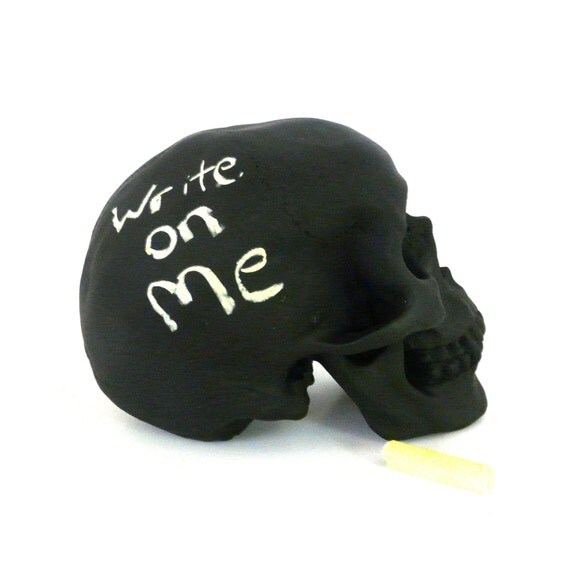
So this all started with a beautiful office object found on the Colossal Shop's page. Turns out, there's a cheaper option on Etsy, even though I like the idea of a coral-colored skull better:
From here, I recall the myriad skulls I have seen with writing on them. Skulls on their own become separated from the individual that owned it, looking to non-anthropologists and biologists as just another skull. So why not write a caption right on there?
Descartes' skull was inscribed with a poem about the great brain that lived inside it (yeah, I know, body/mind duality. But Descartes also thought that the two might come together in the pineal gland, so the physical body was important to him as well).
MusƩe de l'homme, Paris
Other brains were not drawn upon as odes, but as didactic or research models, like this poor soul's noggin used as a phrenology model:
Semmelweis Museum, Budapest
And sometimes, it's just for identification:
Mütter Museum, Philadelphia
*more info can be found by clicking on the pictures
Medieval Medicine and Popular Culture
First of all, THIS VIDEO starring Steve Martin as Theodoric of York. And we all know the Bring Out Your Dead scene in Monty Python and the Holy Grail.
But then there's Phone Call to the Fourteenth Century.
And this Leech Collector.
And then, for a lack of knowledge regarding popular culture, here's some medieval torture.
But then there's Phone Call to the Fourteenth Century.
And this Leech Collector.
And then, for a lack of knowledge regarding popular culture, here's some medieval torture.
I *HEART* YOU
It's hard to tell the proportion of adorable to disgusting when it comes to some pictures. Point and case:
from Discarding Images
Wednesday, April 30, 2014
Whales, out of their natural context
In light of the recent beached whale set to explode, memories of the 1970 planned explosion of a beached whale that, somewhat comically but also tragically, didn't work out so well, and the extra-gross whale that exploded when it was being cut open, I started thinking about other beached whales I had come across in prints and texts.
They were always considered omens, in this case one that coincided with a Spanish attack on the Netherlands.
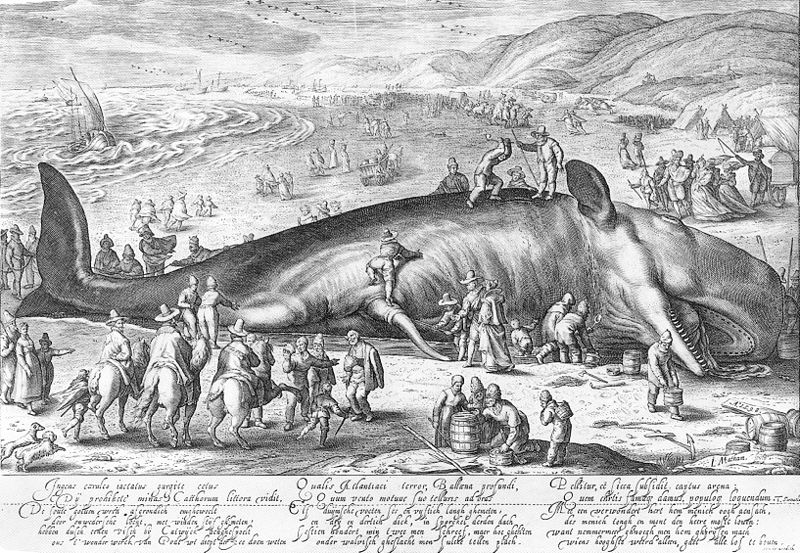
I also came across this print, from a wildly different context:
Jan Saenredam, Stranded Whale, 1602
One website provides the translation of the text:
“A large whale, thrown up out of the blue sea (gods, let it not be a bad omen!), washed up on the beach near Katwijk. What a terror of the deep Ocean is a whale, when it is driven by the wind and its own power on to the shore of the land and lies captive on the dry sand. We commit this creature to paper and we make it famous, so that the people can talk it about it.”
I also came across this print, from a wildly different context:
Ida Bagus Nyoman Rai-Sanur, Indonesia, 1970s
Recently Slate had a story on how the great Blue Whale was suspended from the ceiling of the Natural History Museum in New York.
A second famous whale in the museum is shown fighting with a giant squid for its life. If you haven't seen either in person, the movie The Squid and the Whale does a good job of conveying the nostalgic feeling many have for them.
Labels:
dead things,
giant dead fish,
giant fake whales,
movies,
seathings
Tuesday, April 29, 2014
Monday, April 28, 2014
An Art Historical Tour of Absinthe
On a trip to the Netherlands, I bought a tiny bottle of absinthe. My roommates and friends would have none of it. And honestly, I found it pretty foul. But I could no longer stand the taste of licorice after buying Dutch Drop Mentos--a compilation of mint and licorice that seems to be a regional delicacy:
Nonetheless, absinthe has always been advertised as an intoxicating and creativity-inspiring spirit due to its art historical past, especially with Van Gogh. It doesn't hurt that Poppy Z. Brite sprinkled references to it throughout her goth fiction anthology Wormwood and Nine Inch Nails featured it in their video for Perfect Drug.
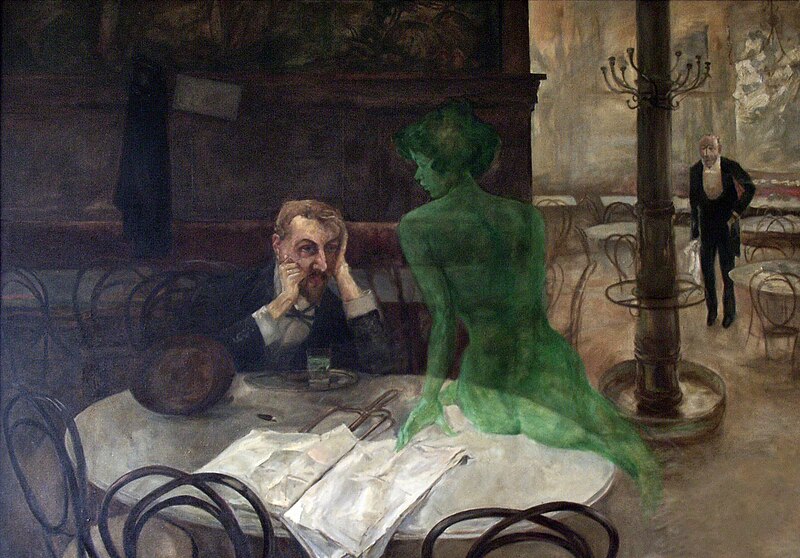
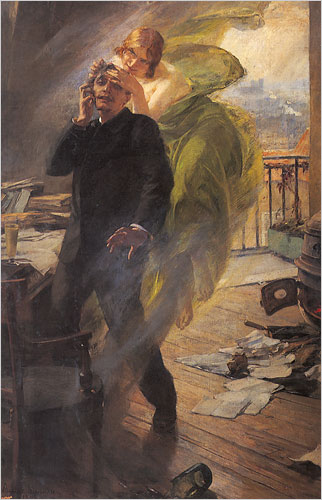
Absinthe is distilled from wormwood, anise, fennel, and god knows what else. It's often green, which is why it (and/or its effects) are referred to as "the green fairy."
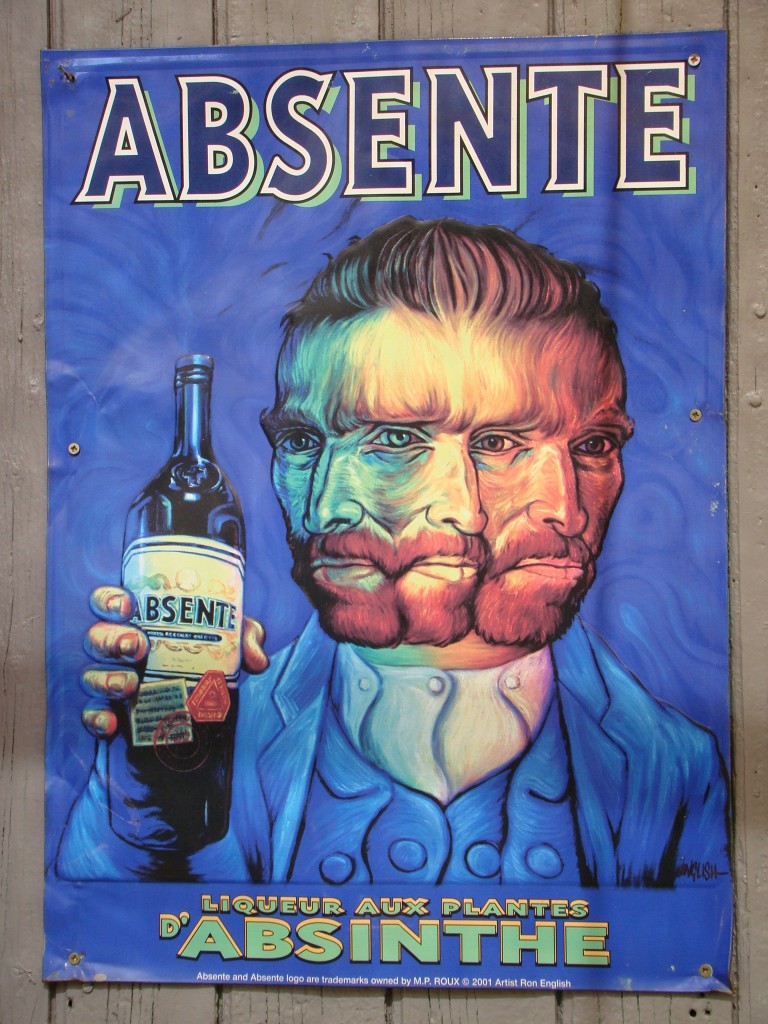
But much of the mythology started with painters. Which now leads to crap like this, obviously based on his most famous self portrait and reports of his imbibing:
Nonetheless, absinthe has always been advertised as an intoxicating and creativity-inspiring spirit due to its art historical past, especially with Van Gogh. It doesn't hurt that Poppy Z. Brite sprinkled references to it throughout her goth fiction anthology Wormwood and Nine Inch Nails featured it in their video for Perfect Drug.
Absinthe is distilled from wormwood, anise, fennel, and god knows what else. It's often green, which is why it (and/or its effects) are referred to as "the green fairy."
But much of the mythology started with painters. Which now leads to crap like this, obviously based on his most famous self portrait and reports of his imbibing:
But Degas, Toulouse-Lautrec, and Van Gogh, among others, depicted the beverage:
Toulouse-Lautrec
Van Gogh
Privat-Livemont
Oliva
Maignon
Thursday, April 24, 2014
The Academic Obsession with Mad Men
First, I would like to point out that Mad Men has some amazing art historical conversations and images throughout. It's hard for an art historian to forget the scene when the underlings sneak in to Cooper's office to see the Rothko, when visitors catch sight of The Fisherman's Wife, etc. And the artworks themselves have spawned a blog just to keep track of them: http://artofmadmen.wordpress.com/
But both academics and libraries have combined a love of mad men with scholarly inquiry. Duke University Library's Rubenstein Rare Book Library has created Mad Men Mondays to use the show as a jumping off point for investigations into parts of collection that corroborate the ideas floating around in the 60s: http://blogs.library.duke.edu/rubenstein/tag/mad-men/
And Duke University Press came out recently with a volume called Mad Men, Mad World: Sex, Politics, Style and the 1960s, edited by Lauren M. E. Goodlad, Lilya Kaganovsky, and Robert A. Rushing
But both academics and libraries have combined a love of mad men with scholarly inquiry. Duke University Library's Rubenstein Rare Book Library has created Mad Men Mondays to use the show as a jumping off point for investigations into parts of collection that corroborate the ideas floating around in the 60s: http://blogs.library.duke.edu/rubenstein/tag/mad-men/
And Duke University Press came out recently with a volume called Mad Men, Mad World: Sex, Politics, Style and the 1960s, edited by Lauren M. E. Goodlad, Lilya Kaganovsky, and Robert A. Rushing
Sunday, April 20, 2014
L'art franƧais sur le film
A young Sacha Guitry made a film chronicling French artists, some of which were still alive, giving us sad yet beautiful footage of aging painters struggling against physical problems to persist in their artistic pursuits.
One is Monet, whose video I originally found through Open Culture, a site that has been scouring the recent videos made publicly available by British PathƩ. This was filmed later in Monet's life when he was suffering from cataracts. But you can't tell. What you notice is his clean white suit somehow surviving next to his giant palette, his tiny dog, and the picturesque surroundings that he painted so often and so memorably.
Monet, Japanese Bridge, 1899, Princeton Art Museum
Another is Renoir, the video revealing the advanced state of his arthritis which deformed his hand greatly and likely caused him an immense amount of pain. But he paints nonetheless:
Renoir, Portrait of his son (Pierre), 1910
Thursday, April 17, 2014
The Art of Menses
"Menstrala"
Zanele Muholi’s “Ummeli” (2011)
Here's a link to Salon's article on menstruation and contemporary art.
For some insight, see "Women wearing white: Discourses of menstruation and the experience of menarche" by Theresa Jackson
Monday, April 14, 2014
History of Lady Toys
Via the Chirurgeon's Apprentice:
Bitch Magazine's Oh Joy Sex Toy: A Comic About the History of Vibrators
And my favorite visual snippet from the larger comic:
Bitch Magazine's Oh Joy Sex Toy: A Comic About the History of Vibrators
And my favorite visual snippet from the larger comic:
Saturday, April 12, 2014
The Art Historical Fantasy of Grand Budapest Hotel
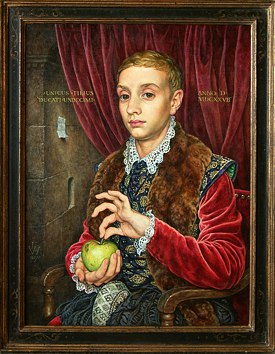
Firstly, Boy with Apple may now be my favorite forgery of all time (with the forgery of the Northern Renaissance style triptych at the Palmer Museum of Art). This is partially everyone was meant to know it was fake--it was made for a movie--but also because it is convincing in its details. The Guardian delicately threw a few examples out there in their article Is The Grand Budapest Hotel's 'Boy with Apple' artwork plausible? See The Gallerist on this as well.
And this was one among many forgeries, others giving a nod to Gustav Klimt and Caspar David Friedrich as noted by the folks blogging for Sotheby's.
The most notable was Two Lesbians Masturbating, a nod by Rich Pellegrino to Egon Schiele.
But the movie was a graphic design whirlpool of Eastern European pre-war imagery. The Creative Review looks at many of the painstakingly rendered props in Designing for The Grand Budapest Hotel. And they look at more images of little details like keychains, perfume, etc. at The Warholian.
Boy with Apple, Michael Taylor
And this was one among many forgeries, others giving a nod to Gustav Klimt and Caspar David Friedrich as noted by the folks blogging for Sotheby's.
The most notable was Two Lesbians Masturbating, a nod by Rich Pellegrino to Egon Schiele.
Two Lesbians Masturbating, Rich Pellegrino
Portrait of Wally, Egon Schiele
But the movie was a graphic design whirlpool of Eastern European pre-war imagery. The Creative Review looks at many of the painstakingly rendered props in Designing for The Grand Budapest Hotel. And they look at more images of little details like keychains, perfume, etc. at The Warholian.
Saturday, April 5, 2014
Friday, April 4, 2014
Brain Scoop
My new favorite thing: Brain Scoop
And this totally feminist themed video, well I have to agree:
Thanks CH!
Wandering Lonely as a Cloud
"You can never be nubilous," [John Constable] told his friend Archdeacon John Fisher in 1823. "I am the man of clouds." - from Slate
Constable did a number of cloud studies, as this one from 1821:
I am not one for the nostalgia of Romanticism, but I love clouds, largely due to a children's book of which I can no longer find any evidence that taught me about cumulus, cumulo-nimbus, stratus, cirrus, and even mythological deities like Zephyr.
Not much later, the compound photographs of Gustav le Gray were created, layering negatives to make sure both land and sky would be evident in the final image even though they required different exposure times. Le Gray, like Constable, had his own cloud obsession:
If only Icarus had more cloud cover....
Pessaries
In this case, not the good-smelling kind that tempts the uterus to move or expel its liquids, but the kind that KEEPS YOUR UTERUS IN PLACE. (The German word for this is MutterzƤpfchen, which is like "mother suppositories" for lack of a modern translation. Granted, they got much smaller and ended up looking more like tampons [unlike the one below] later on.)
Some examples can be seen here, and I took one to show you what I'm talking about:
Subscribe to:
Posts (Atom)